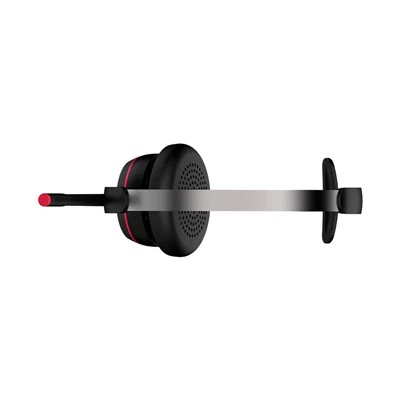
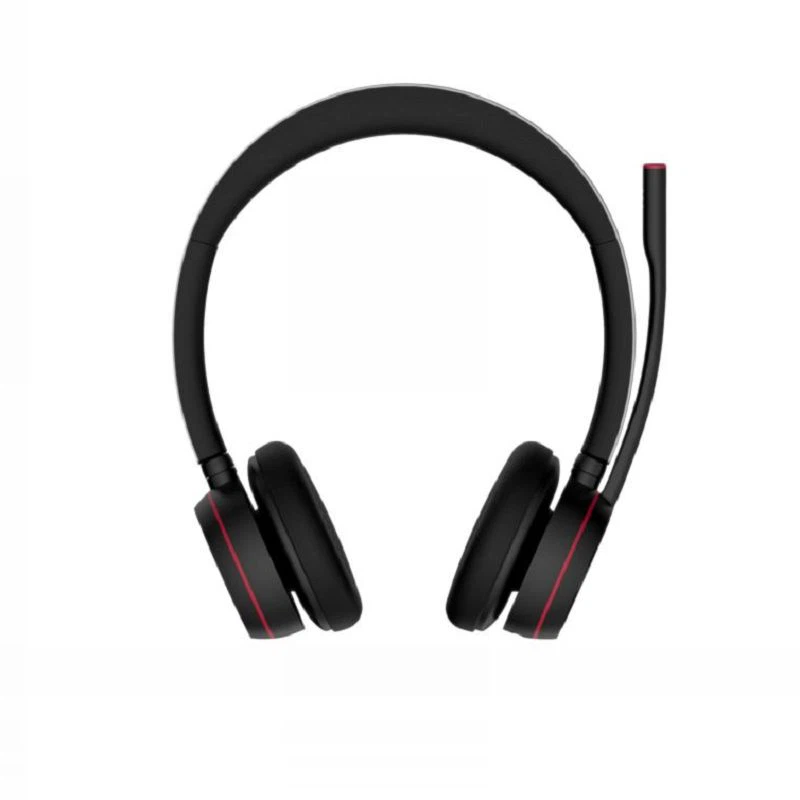
Hey there! As a supplier of Noise Cancelling Teams Headsets, I often get asked about the dynamic range of these amazing pieces of tech. So, let's dive right in and break it down.
First off, what exactly is dynamic range? In simple terms, it's the difference between the quietest and the loudest sounds that a headset can handle. Think of it like a volume scale. The wider the dynamic range, the more variety of sounds the headset can accurately reproduce. For a noise-cancelling Teams headset, this is super important because it has to deal with a whole bunch of different audio scenarios.
Let's say you're in a busy office environment. There are the constant hums of computers, the chatter of colleagues, and maybe even the occasional phone ringing. A good noise-cancelling headset with a wide dynamic range can pick up the soft voice of your teammate on a call while effectively blocking out all that background noise. On the other hand, if the dynamic range is too narrow, it might struggle to distinguish between the quiet and the loud sounds.
One of the key factors that affect the dynamic range of a noise-cancelling Teams headset is the quality of its microphones and speakers. High-quality components can capture and reproduce a wider range of frequencies. For example, a well-designed microphone can pick up the subtle nuances in a person's voice, like the soft whispers or the powerful shouts. And the speakers need to be able to reproduce those sounds accurately, without distortion.
Another aspect to consider is the noise-cancelling technology itself. There are different types of noise cancellation, such as active and passive. Active noise cancellation uses electronics to create an opposite sound wave to cancel out the background noise. This technology can significantly improve the dynamic range by reducing the interference from external sounds. Passive noise cancellation, on the other hand, relies on the physical design of the headset to block out noise. While it's not as effective as active noise cancellation, it can still contribute to a better dynamic range.
Now, let's talk about how the dynamic range impacts your experience with a noise-cancelling Teams headset. When you're on a call, a wide dynamic range means you can hear every word clearly, whether it's a soft-spoken colleague or someone who likes to raise their voice. It also allows for a more immersive audio experience, making you feel like you're right in the same room as the other person.


If you're in the market for a noise-cancelling Teams headset, you might want to check out our Best Single Ear Headset with Mic. It's designed to provide an excellent dynamic range, ensuring that you get the best audio quality on your calls. And of course, our Noise Cancelling Teams Headset is also a great option, with advanced noise-cancelling technology and a wide dynamic range.
So, why is the dynamic range so important for a noise-cancelling Teams headset? Well, it boils down to communication. In a professional setting, clear communication is key. A headset with a wide dynamic range can help you have more productive calls, whether you're in a noisy office or a quiet home environment.
If you're interested in learning more about our noise-cancelling Teams headsets or if you're looking to make a purchase, don't hesitate to reach out. We're here to help you find the perfect headset for your needs. Whether you're a small business owner, a remote worker, or part of a large corporation, we have the right solution for you.
In conclusion, the dynamic range of a noise-cancelling Teams headset is a crucial factor that can greatly enhance your audio experience. By understanding how it works and what to look for, you can make an informed decision when choosing a headset. So, if you're ready to take your communication to the next level, give our headsets a try. We're confident that you'll be impressed with the quality and performance.
References:
- Audio engineering textbooks for general knowledge on dynamic range.
- Industry reports on noise-cancelling headset technology.