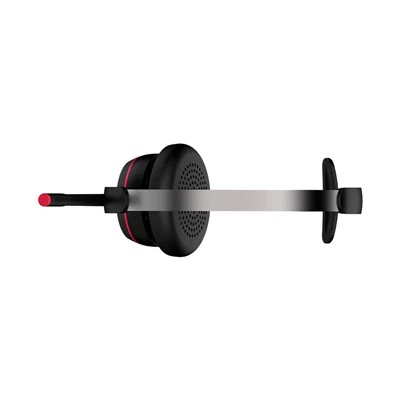
In the fast - paced world of modern communication, the demand for high - quality audio equipment has skyrocketed. As a leading supplier of Noise Cancelling Teams Headset, I am often asked about the adaptability of the noise - cancelling feature in our headsets to different environments. In this blog, I will delve into the science behind noise cancellation and explore whether our headsets can truly adapt to various surroundings.
The Basics of Noise Cancellation
Noise cancellation technology is designed to reduce unwanted ambient noise, allowing users to focus on their audio content, whether it's a Teams call, music, or a podcast. There are two main types of noise cancellation: passive and active.
Passive noise cancellation relies on the physical design of the headset to block out sound. This includes using materials that absorb or reflect sound waves, such as thick padding and closed - back ear cups. While passive noise cancellation can be effective at reducing low - frequency and mid - frequency sounds, it has its limitations, especially when it comes to high - frequency noise.
Active noise cancellation (ANC), on the other hand, is a more advanced technology. It uses microphones to detect ambient noise and then generates an "anti - noise" signal that is the exact opposite of the detected noise. When the anti - noise signal is combined with the ambient noise, they cancel each other out, resulting in a quieter listening environment.
Adapting to the Environment
The ability of a noise - cancelling headset to adapt to the environment is crucial for providing an optimal listening experience. Our Noise Cancelling Teams Headset is equipped with advanced sensors and algorithms that enable it to analyze the surrounding noise in real - time.
These sensors can detect different types of noise, such as the hum of an air conditioner, the chatter in a coffee shop, or the rumble of traffic. Once the noise is detected, the headset's ANC system adjusts the anti - noise signal accordingly. For example, in a noisy office environment with a lot of background chatter, the headset will increase the strength of the anti - noise signal to block out the voices. In a more quiet environment, such as a library, the ANC system will reduce the anti - noise signal to avoid over - cancelling and potentially distorting the audio.
The Science Behind Adaptive Noise Cancellation
The adaptive noise - cancelling feature in our headsets is based on sophisticated signal processing algorithms. These algorithms use machine learning techniques to analyze the characteristics of the ambient noise, such as its frequency, amplitude, and duration. By continuously monitoring the noise, the headset can make rapid adjustments to the anti - noise signal.
One of the key components of the adaptive noise - cancelling system is the feedback loop. The microphones on the headset constantly pick up the ambient noise and send the signal to the ANC processor. The processor then analyzes the signal and generates the appropriate anti - noise signal. This anti - noise signal is then sent to the speakers in the headset, where it is combined with the ambient noise to cancel it out.
Another important aspect of the adaptive noise - cancelling technology is the ability to distinguish between different types of noise. For example, the headset can differentiate between continuous noise, such as the hum of a machine, and intermittent noise, such as a door slamming. By understanding the nature of the noise, the headset can apply the appropriate level of noise cancellation.
Benefits of Adaptive Noise Cancellation
The adaptive noise - cancelling feature in our Noise Cancelling Teams Headset offers several benefits for users.
First and foremost, it provides a more comfortable listening experience. By adapting to the environment, the headset can reduce the amount of noise that reaches the user's ears, allowing them to focus on their audio content without being distracted by background noise. This is particularly important for professionals who use Teams for work, as it can improve communication and productivity.
Secondly, adaptive noise cancellation can help to protect the user's hearing. By reducing the need to turn up the volume to overcome background noise, the headset can prevent long - term damage to the ears. This is especially relevant in noisy environments, where users may be tempted to increase the volume to dangerous levels.
Finally, the adaptive noise - cancelling feature makes our headsets more versatile. Whether you're in a busy office, a noisy coffee shop, or a quiet home environment, the headset can adjust to provide the best possible listening experience.
Comparing with Traditional Noise - Cancelling Headsets
Traditional noise - cancelling headsets typically have a fixed level of noise cancellation. This means that they are designed to work well in a specific type of environment, but may not perform as effectively in other settings. For example, a headset that is optimized for a quiet office may not be able to handle the high - level noise in a construction site.
In contrast, our Noise Cancelling Teams Headset with adaptive noise cancellation can adapt to a wide range of environments. This makes it a more practical and useful option for users who need to use their headsets in different settings.
Real - World Applications
The adaptive noise - cancelling feature in our headsets has many real - world applications. For example, in the business world, professionals who use Teams for video conferencing can benefit from the ability to block out background noise. This ensures that their voice is clear and that they can focus on the conversation without distractions.
In the education sector, students can use our headsets to study in noisy environments, such as libraries or study halls. The adaptive noise cancellation can help them to concentrate on their studies by reducing the background noise.
For travelers, our headsets are a great companion. Whether you're on a plane, a train, or a bus, the adaptive noise - cancelling feature can make your journey more comfortable by blocking out the noise of the engine and other passengers.
The Future of Adaptive Noise Cancellation
As technology continues to evolve, we can expect to see even more advanced adaptive noise - cancelling features in our headsets. For example, future headsets may be able to learn the user's preferences and automatically adjust the noise cancellation based on the user's past experiences.


In addition, the integration of artificial intelligence and machine learning may allow the headsets to better understand the context of the environment and provide more personalized noise - cancelling solutions.
Conclusion
In conclusion, our Noise Cancelling Teams Headset does have a noise - cancelling feature that adapts to the environment. Through advanced sensors, algorithms, and signal processing, the headset can analyze the surrounding noise in real - time and adjust the anti - noise signal accordingly. This provides a more comfortable, versatile, and effective listening experience for users in a variety of settings.
If you're interested in purchasing our high - quality Noise Cancelling Teams Headset or our Best Single Ear Headset with Mic, we invite you to contact us for a procurement discussion. We are committed to providing the best audio solutions for your communication needs.
References
- "Fundamentals of Noise Cancellation Technology" by Audio Engineering Society
- "Adaptive Signal Processing for Noise Cancellation" by IEEE Signal Processing Magazine
- "The Impact of Noise Cancellation on User Experience" by Journal of Audio Engineering Society