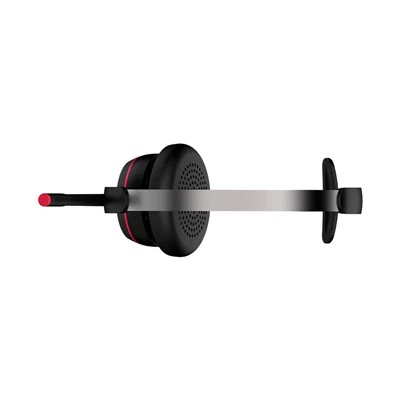
In the realm of audio technology, the battle between AI noise-cancelling headsets and noise-isolating headsets has been heating up. As a supplier of AI noise-cancelling headsets, I am deeply involved in this technological race and have witnessed firsthand the evolution and capabilities of both types of headsets. In this blog, I will delve into the differences between these two types of headsets, explore their respective advantages and disadvantages, and ultimately determine whether AI noise-cancelling headsets are truly better than noise-isolating headsets.
Understanding Noise-Isolating Headsets
Noise-isolating headsets work on a simple principle: they physically block out external noise by creating a seal around the ears. This is typically achieved through the use of soft ear cushions or in-ear tips that fit snugly into the ear canal, preventing sound waves from entering. The effectiveness of noise isolation depends largely on the design and quality of the headset. For example, over-ear noise-isolating headsets with large, padded ear cups can provide a high level of noise reduction, especially for low-frequency sounds. In-ear noise-isolating headsets, on the other hand, can be very effective at blocking out high-frequency noise due to their close fit in the ear canal.
One of the main advantages of noise-isolating headsets is their simplicity. They do not require any power source to function, which means they are always ready to use and do not add the complexity of battery management. Additionally, they are generally more affordable than AI noise-cancelling headsets, making them a popular choice for budget-conscious consumers.
However, noise-isolating headsets also have their limitations. They are not very effective at blocking out low-frequency noise, such as the rumble of traffic or the hum of an air conditioner. This is because low-frequency sound waves have longer wavelengths and can more easily penetrate the physical barrier created by the headset. Moreover, the level of noise isolation can vary depending on how well the headset fits the individual's ears. If the fit is not perfect, external noise can leak in, reducing the overall effectiveness of the headset.
The Rise of AI Noise-Cancelling Headsets
AI noise-cancelling headsets, on the other hand, use advanced algorithms and microphones to actively cancel out external noise. These headsets continuously analyze the ambient noise around them and generate an anti-noise signal that is the exact opposite of the incoming noise. When the anti-noise signal is combined with the external noise, they cancel each other out, resulting in a quieter listening environment.
One of the key advantages of AI noise-cancelling headsets is their ability to adapt to different noise environments. Unlike noise-isolating headsets, which provide a fixed level of noise reduction, AI noise-cancelling headsets can adjust their noise-cancelling performance based on the type and intensity of the ambient noise. For example, in a noisy office environment, the headset can increase its noise-cancelling strength to block out the chatter of colleagues and the hum of office equipment. In a quieter environment, such as a library, the headset can reduce its noise-cancelling strength to maintain a more natural listening experience.
Another advantage of AI noise-cancelling headsets is their superior performance in blocking out low-frequency noise. The advanced algorithms used in these headsets are specifically designed to target low-frequency sound waves, making them much more effective at reducing the rumble of traffic, the hum of an airplane engine, or the bass from a nearby speaker.
However, AI noise-cancelling headsets also have some drawbacks. They require a power source to operate, which means they need to be charged regularly. Additionally, the advanced technology used in these headsets can make them more expensive than noise-isolating headsets.
Comparing the Two: Which is Better?
When it comes to determining whether AI noise-cancelling headsets are better than noise-isolating headsets, it really depends on the specific needs and preferences of the user.
For users who are on a tight budget and primarily need to block out high-frequency noise in relatively quiet environments, noise-isolating headsets may be the better choice. They are simple, affordable, and do not require any power source. For example, students studying in a library or commuters on a quiet train may find noise-isolating headsets to be sufficient for their needs.
On the other hand, for users who frequently find themselves in noisy environments, such as business travelers, office workers, or gamers, AI noise-cancelling headsets are likely to be a better option. The ability to adapt to different noise environments and effectively block out low-frequency noise makes these headsets ideal for situations where a high level of noise reduction is required.


Our AI Noise-Cancelling Headsets
As a supplier of AI noise-cancelling headsets, we offer a range of products that are designed to meet the needs of different users. Our AI Noise-Cancelling Headset for Business Meetings is specifically designed for professionals who need to participate in business meetings in noisy environments. It features advanced AI noise-cancelling technology that can effectively block out background noise, ensuring clear and uninterrupted communication.
Our Best Headset for Teams Calls is another popular product among office workers. It is optimized for use with Microsoft Teams and other video conferencing platforms, providing high-quality audio and excellent noise-cancelling performance.
For those who prefer a USB-C connection, our USB-C AI Noise-Canceling Office Headset is a great choice. It offers a convenient and reliable way to connect to your computer or other devices, while still providing top-notch noise-cancelling capabilities.
Conclusion
In conclusion, while both AI noise-cancelling headsets and noise-isolating headsets have their own advantages and disadvantages, AI noise-cancelling headsets generally offer a higher level of noise reduction and more flexibility in different noise environments. If you are looking for a headset that can provide excellent noise-cancelling performance in a variety of situations, our AI noise-cancelling headsets are definitely worth considering.
If you are interested in learning more about our products or would like to discuss a potential purchase, please feel free to reach out to us. We are always happy to help you find the right headset for your needs.
References
- Consumer Reports. (2023). Noise-Canceling Headphones Buying Guide.
- TechRadar. (2023). Best Noise-Canceling Headphones.
- CNET. (2023). How Noise-Canceling Headphones Work.